
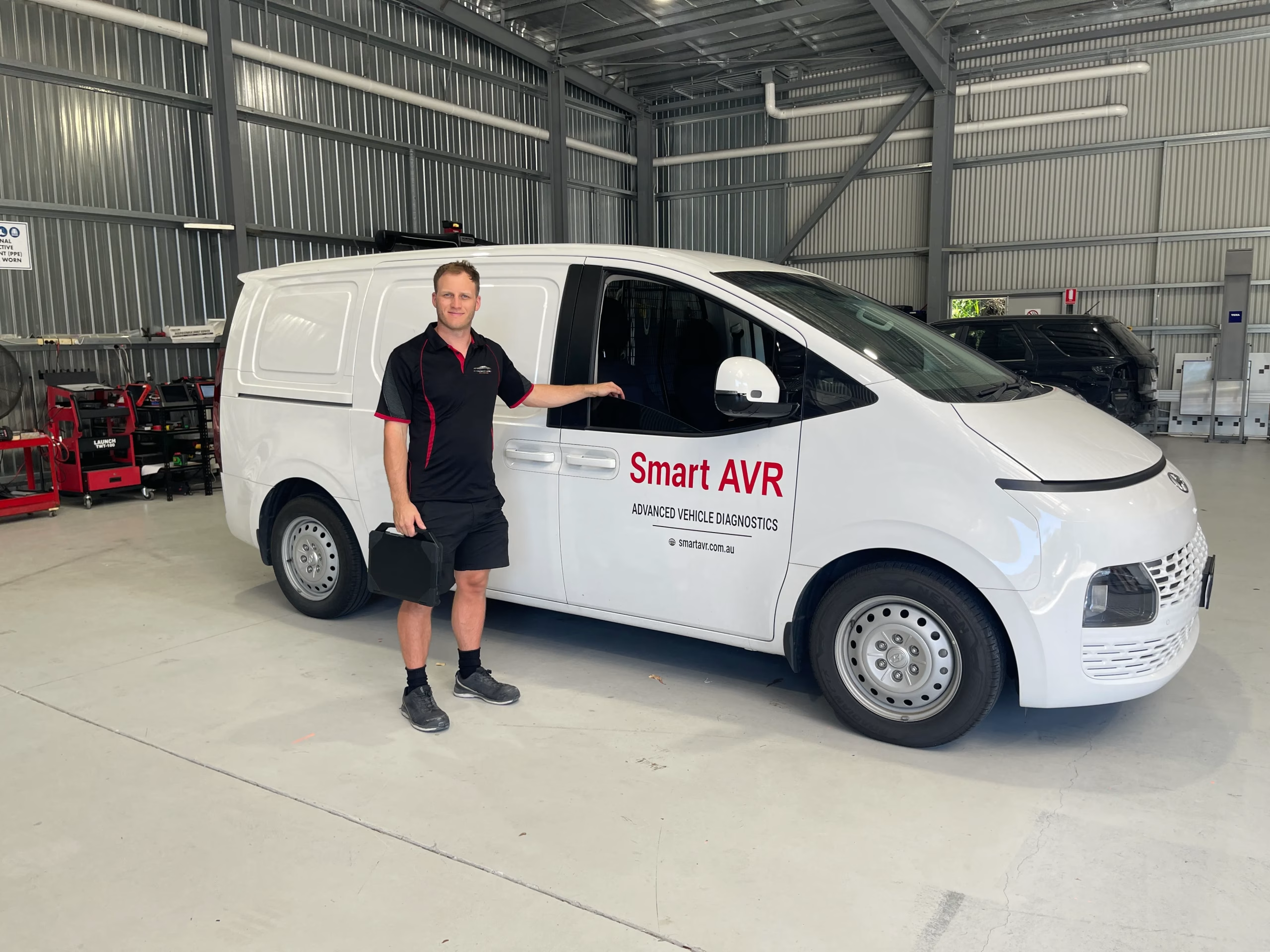
Before any calibration begins, it’s essential to complete a full pre-check. This ensures your calibration is based on a stable, repeatable setup.
Vehicle Checks:
- Tyre Pressures – Must be set to factory spec to ensure ride height is correct.
- Suspension Mode – If the car has adjustable suspension, set to normal or comfort mode.
- Steering Wheel – Ensure it is straight, and the wheels are pointed forward.
- Battery Voltage – Must be above 12.5 volts. Use a battery maintainer to keep power stable.
- Doors Closed – All vehicle doors must be closed. Open doors can affect sensor positioning.
- No Occupants – Remove any people or heavy objects inside the car.
- Transmission in Park – Or Neutral (manual) with handbrake applied.
Environmental Checks:
- Flat Floor – Use a spirit level to check for slope. Uneven floors can throw off measurements.
- Clear Space – You’ll need:
- Up to 8m in front of the vehicle for camera targets
- Up to 5m clearance on both sides
- Lighting – Avoid strong backlighting, reflections, or shadows across the calibration board.
- No Interference – Remove reflective tools, black-and-white objects, or signage from within the camera’s field of view.
Scan Tool Preparation:
- Confirm the vehicle profile is correct.
- Read and store fault codes. Clear them before calibration begins.
- Confirm ADAS modules are online and responding.
Objective: Complete a full pre-calibration inspection and setup process to create a stable and accurate calibration environment.